
Tankless vs. Traditional Water Heaters — Which Is Right for Your Fresno Home?
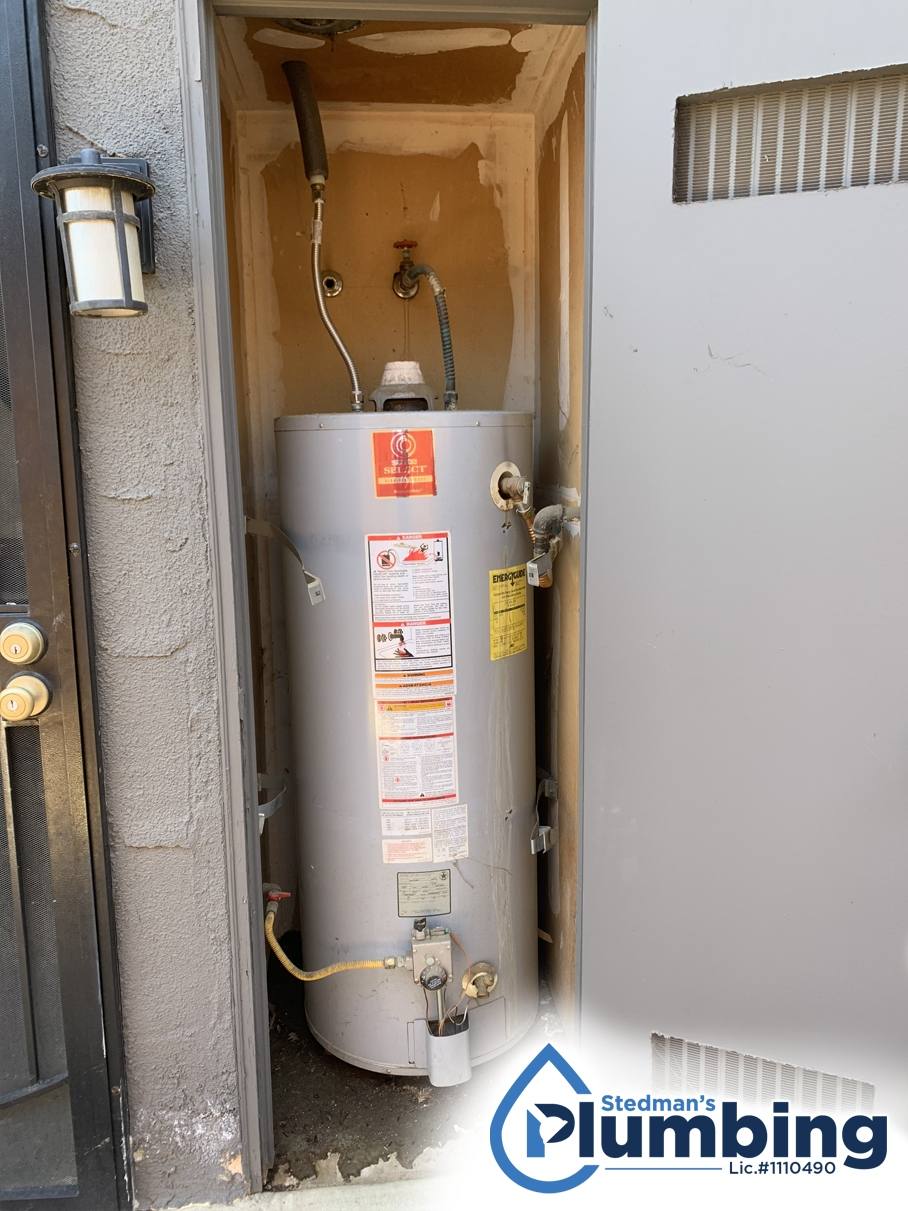
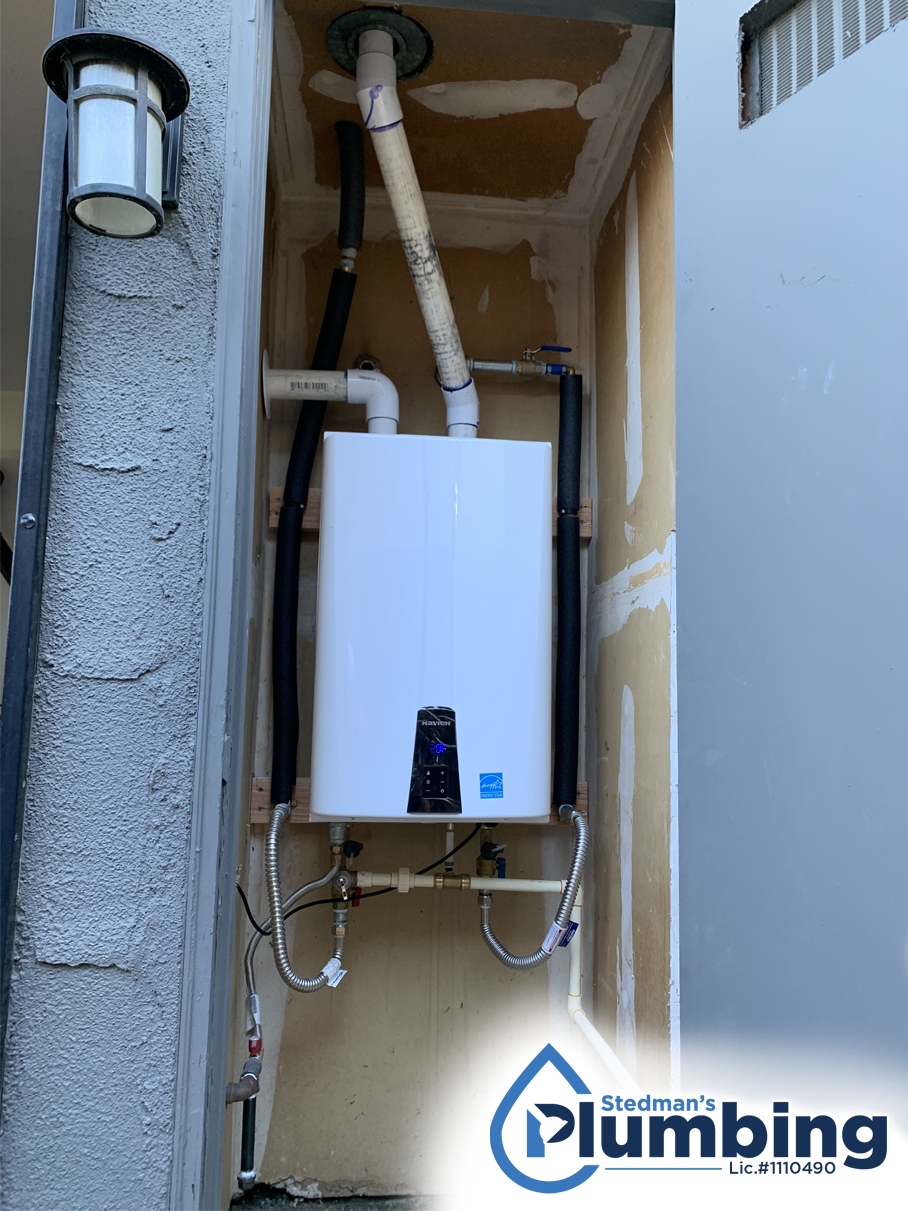
It's one of the most common questions we get at Stedman's Plumbing: "Should I go tankless or stick with a traditional water heater?" The honest answer depends on your home, your budget, and how you use hot water. Here's a straightforward breakdown from a team that installs both every single day in Fresno and the Central Valley.
How Each System Works
Traditional (tank) water heaters store 40–80 gallons of pre-heated water in an insulated tank. The burner or heating element cycles on and off throughout the day to keep that water hot — whether you're using it or not. When the tank empties, you wait 20–40 minutes for it to recover.
Tankless (on-demand) water heaters have no storage tank. Cold water flows through a heat exchanger — heated by a powerful gas burner or electric element — and delivers hot water instantly, only when you turn on the tap. There's no standby heating, no tank to run out.
Cost: Upfront vs. Long-Term
Traditional water heaters cost $800–$1,500 installed. A quality tankless unit runs $2,000–$3,500 installed, depending on the brand and whether your home needs a gas line upgrade. That gap is real — but here's what most people miss:
- Traditional tanks last 8–12 years. A Navien or Rinnai tankless unit lasts 20+ years with proper maintenance.
- Tankless units are 24–34% more energy efficient than storage tanks, according to the U.S. Department of Energy — a significant saving given Fresno's year-round hot water demand.
- Many Fresno homeowners recoup the cost difference in 5–7 years through lower gas bills alone.
Performance in Fresno's Climate
Fresno summers are hot. Your incoming water temperature in July is significantly warmer than in January — which means your water heater works less hard in summer regardless of type. However, Fresno's hard water (16–18 grains per gallon) is a factor worth considering. Hard water causes mineral buildup inside both tank units and tankless heat exchangers. The difference: a tankless unit's heat exchanger can be descaled annually, extending its life. A tank corrodes from the inside out, and no maintenance can fully reverse that.
For Fresno homeowners, we typically recommend pairing any water heater — tankless especially — with a water softener or scale inhibitor to maximize longevity.
Hot Water Capacity
A traditional 50-gallon tank serves most families of 2–4 comfortably. Problems arise when multiple people shower back-to-back or when laundry and dishwasher run simultaneously — you run out and wait.
Tankless units deliver endless hot water — but they have a flow rate limit measured in GPM (gallons per minute). A quality unit like the Navien NPE-240A2 delivers up to 11.2 GPM, which handles 2–3 simultaneous applications easily. For very large homes with high simultaneous demand, we can install two units in a cascading setup.
Space
Traditional tanks take up significant floor space — typically a 2'×2' footprint plus clearance. Tankless units mount on the wall and are roughly the size of a small suitcase. For Fresno homes with tight utility closets or garages doubling as storage, this matters.
Which Should You Choose?
Go tankless if: You plan to stay in your home 7+ years, want lower energy bills, value endless hot water, or are replacing a failing unit and want the last water heater you'll ever buy.
Stick with traditional if: You're on a tight budget right now, plan to sell the home within 3–4 years, or have electric-only service with no gas line (electric tankless units require very high amperage).
At Stedman's Plumbing, we install Navien, Rinnai, A.O. Smith, Bradford White, and Rheem — both tank and tankless. We'll give you an honest recommendation based on your home's layout, your gas service, and your budget. No upsells, no pressure.
Get a Free Water Heater Assessment
Not sure which is right for your home? Call us and we'll walk you through it — no charge, no obligation.